
Customizable Training Solutions
Specialized Training Services, in partnership with CPW Consulting Group, provides Threat Assessment and Management training that connects people with practical skills that create enduring cultures of safety.
We provide fundamental and advanced Behavioral Threat Assessment and Management Training that is contextualized to your unique environment by incorporating skills training in:
Workplace Violence Prevention
Best practices in workplace violence prevention, including policy and procedure that are compliant with relevant state legislation, such as that passed in California, New York and Washington.
Deescalation and conflict resolution for frontline staff
Tactics for de-escalating heightened emotional situations and resolving conflicts
Interrupting the grief-to-grievance trajectory
Explores the behavioral and neuroscientific processes along the loss to grievance trajectory and effective management strategies for diverting individuals from revenge and violence to grief and hope.
The impact of distrust on the threat environment
Explores the impact of societal, institutional, and interpersonal distrust on security, and practical strategies that can be deployed to elevate trust to mitigate threats and establish safer environments.
Violence Threat Assessment and Management for mental health professionals
Behavioral Threat Assessment from a clinical lens. Provides clinicians skills to identify, evaluate, and manage potential violence using evidence‑based frameworks.
Mental Health First Aid
A one-day training that teaches people to recognize and respond confidently to peers, students, employees, and the like, who might be experiencing a mental health challenge
QPR - Suicide screening, management, and response
Certified QPR Pathfinder training to develop the competence and confidence to help others survive the crisis of suicide
Building effective threat assessment teams
Best practices for identifying individual team members and supporting an effective, cohesive and collaborative multidisciplinary team.
Investigation and intelligence gathering
Strategies for identifying and gathering intelligence to best inform the assessment and management of threats to safety
Trauma informed interviewing
Best practices for effective investigative interviewing that acknowledges trauma and empowers interviewees
Applying Structured Professional Judgment tools
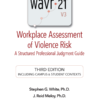
Best practices for incorporating one or more structured professional judgment tools–such as the WAVR-21, the Dechefr, etc.–into the threat assessment process.
Leveraging AI in assessing threatening communications
Utilizing artificial intelligence tools, such as Dechefr, to efficiently and reliability assess threatening communications
Addressing vicarious targets
Vicarious targets — individuals who learn of a threat against another and experience it as if directed toward themselves — have increasingly become an important element in compassionate and effective threat management. Learn subtypes and effective management tactics.
Report writing and providing expert testimony
Equips professionals to efficiently produce clear, defensible reports and deliver credible well-structured testimony.
Ethical and legal considerations
Focuses on de-siloing information and understanding the myths and mandates around confidentiality and information sharing. Includes “Red Flag” laws, psychiatric holds, HIPAA and FERPA, and legal duty of care.
Neuroscience of violence, threats, and threat assessment
Explores how emotion, cognition, physical/environment influences shape violent behavior and inform evidence‑based approaches to evaluating and managing threat
Crisis communication
The critical role crisis communication plays in threat management
Tactical self-care for threat assessment professionals
Practical, realistic tactics to manage stress, and sustain sound judgment while working in high‑stakes or persistently crisis-centered environments.
Extremism, radicalization, and the cyberenvironment
Recognizing and mitigating the signs and impact of extremism, including the components and processes of online radicalization
AI security threats
Actionable strategies to anticipate, assess, and mitigate threats at the intersection of technology and human vulnerability, including AI-induced employment displacement anxiety, AI-assisted/provoked insider threats, AI psychosis, parasocial attachments, and other AI-assisted sabotage behaviors.
Active Assailant Response
Practical strategies, situational awareness, and decision-making techniques to effectively identify and respond to an active assailant incident.
Sector Customization:
Trainings are additionally contextualized by sector, such as corporate, K-12, higher education, houses of worship, financial, insurance, retail, and others.
Profession Customization:
Trainings can also be tailored to specific professions, such as law enforcement, security, mental health, legal, human resources, managers and supervisors, educators, and others.
Specialized Training Services is approved by the American Psychological Association to sponsor continuing education for psychologists. Specialized Training Services maintains responsibility for this program and its content.

Specialized Training Services, Inc. is recognized recognized by SHRM to offer Professional Development Credits (PDCs) for SHRM- CP® or SHRM-SCP® recertification activities.