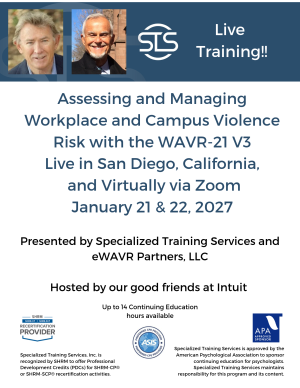

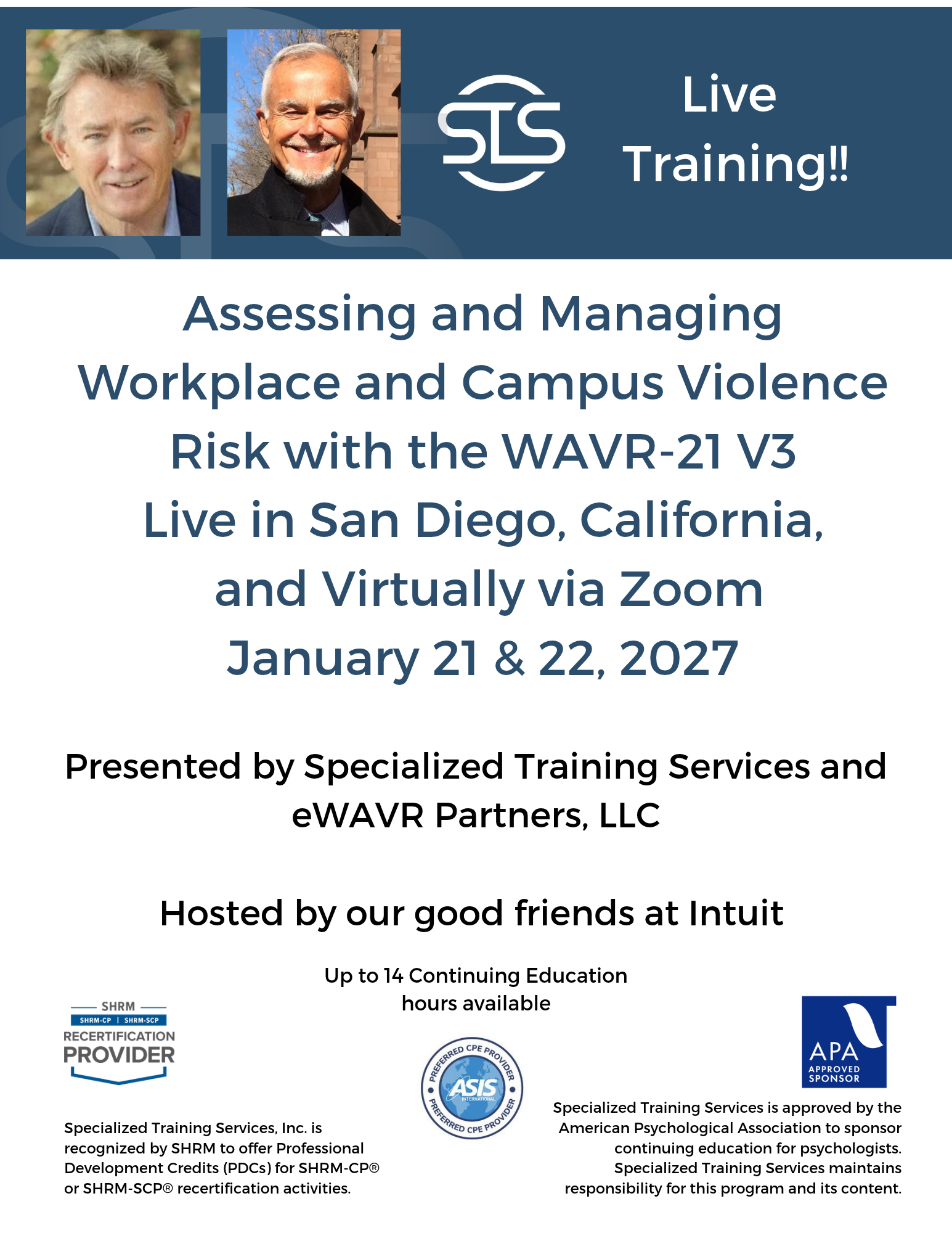
Assessing and Managing Workplace and Campus Violence Risk with the WAVR-21 V3
Specialized Training Services and eWAVR Partners, LLC are proud to present a 2-day WAVR-21 Training by the authors themselves, Dr. Stephen White and Dr. Reid Meloy
Assessing and Managing Workplace and Campus Violence Risk with the WAVR-21 V3, hosted by Intuit, will take place in-person in San Diego, California, and virtually, via Zoom January 21 & 22, 2027
Why should BTAM practitioners consider WAVR-21 training now?
Shrinking budgets in today’s work and campus environments require program managers to carefully consider their allocation of resources for training. At the same time, the risk of harm and the fear of harm remain substantial. New developments require consideration:
- Negligence claims are an increasing risk for organizations who fail to demonstrate best practice principles and a “commitment to program fidelity” that are now recognized for violence prevention in organizational settings.
- AI is changing how BTAM is practiced. The influence of AI must be recognized by practitioners – its powerful advantages, as well as its limitations, rapid rate of change, and the dangers it poses to individuals of concern who come to attention.
This workshop will provide a solid introduction to the most commonly used and highly regarded workplace and campus threat assessment instrument: the WAVR-21 V3.
- Expert trainers. Psychologists Stephen White and Reid Meloy, co-developers of the WAVR-21, draw on their combined multiple decades of consulting, forensic experience and scholarly work to offer an information-packed experience for attendees.
- BTAM foundations and principles of practice are succinctly delineated, and then demonstrated through numerous case examples, valuable to any new or experienced practitioners.
- Each of the WAVR risk and protective factors is defined and illustrated with case examples, and further demonstrated through progressive interactive vignettes
- The role of professional and clinical judgment is emphasized for integrating and interpreting findings derived from structured professional judgment guides (“SPJs”), and that inform case management decisions
- How to use AI appropriately in case work, with several examples
Topics include:
- Motives for and modes of violence, and the pathway to targeted violence
- Mental disorder symptoms and violence
- Stalking, bullying, the suicide-homicide connection, personality disorders and violence, domestic/intimate partner violence
- Data sources, triage, interviewing strategies, bias issues and common missteps, and case formulation in threat assessment
- Recent research and scholarship relevant to BTAM practice
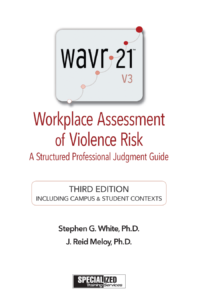
THE WAVR-21 Training Manual
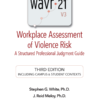
Drs. White and Meloy recommend that attendees purchase the WAVR-21 V3 Manual (which comes with 5 coding packets) in advance of the training. WAVR-21 Manuals are not included in the price of the training, WAVR-21 Manuals and additional coding packets can be purchased HERE
Threat assessment teams in work and campus settings are presented with a range of concerns that they must address as efficiently and accurately as possible, to determine how potentially serious a threat scenario may be. Practitioners do not want to over-react, or to miss a rare but possibly catastrophic incident. There is often insufficient risk-relevant intelligence to inform decision making, at least initially. The WAVR-21 is an organizing tool that provides a transparent “map” of well-recognized targeted violence risk factors, informing the direction of further inquiries and intervention decision making. Using the WAVR-21 demonstrates an organization’s commitment to structured professional judgment – the acknowledged best practice approach for preventing violence in organizational settings.
Cost: Super Earlybird Pricing until November 10th: $755.25 per person (5% off)
“TAP” and ASIS members get an additional 5% off of enrollment with Coupon Code: SAFETY26
Active, sworn law enforcement receive a 50% discount off of the regular price. Email us for details.
CRITICALLY IMPORTANT INSTRUCTIONS:
Purchase is not registration. After making your purchase, you must go into your Specialized Training account and complete the registration form–until you do this, you are not registered. Your first and last name must be included in your account profile.
If you are purchasing enrollment for someone else, they must set up an account in our website (or you may set one up for them). Please email us at info@SpecializedTraining.com once each person for whom you are purchasing enrollment has set up an account with their first and last name in their profile and let us know your order number and the names of each enrollee.
The trainings will take place from 8:30 a.m. until approximately 4:30 p.m. Pacific time on each day (with a break for lunch).
In-person training will be held at Intuit, San Diego. In-person attendees: Logistical information will be provided in your account. The fee includes light snacks, beverages and lunch for in-person attendees.
Virtual Attendees: A Zoom link will be provided in your Specialized Training Account 18 to 24 hours before the training.
There are up to 14 hours of ASIS, APA and SHRM Continuing Education Credits available.
 Specialized Training Services is approved by the American Psychological Association to sponsor continuing education for psychologists. Specialized Training Services maintains responsibility for this program and its content. AI was not used in the development of this program or in any of the content.

Specialized Training Services, Inc. is recognized by SHRM to offer Professional Development Credits (PDCs) for SHRM-CP® or SHRM-SCP® recertification activities.

Paying by Purchase Order? Submit your PO to info@specializedtraining.com.
Description
Threat assessment teams in work and campus settings are presented with a range of concerns that they must address as efficiently and accurately as possible, to determine how potentially serious a threat scenario may be. Practitioners do not want to over-react, or to miss a rare but possibly catastrophic incident. There is often insufficient risk-relevant intelligence to inform decision making, at least initially. The WAVR-21 is an organizing tool that provides a transparent “map” of well-recognized targeted violence risk factors, informing the direction of further inquiries and intervention decision making. Using the WAVR-21 demonstrates an organization’s commitment to structured professional judgment – the acknowledged best practice approach for preventing violence in organizational settings.
Additional information
| IN-PERSON OR VIRTUAL VIA ZOOM | IN PERSON, VIRTUAL via ZOOM |
|---|