Archives: Shop

Showing 91–105 of 110 results

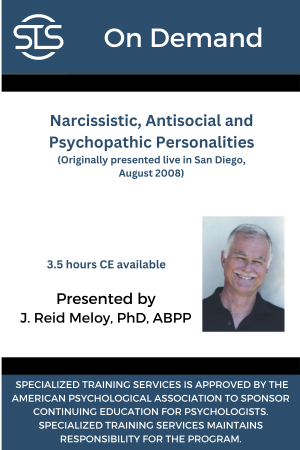
  • Narcissistic, Antisocial and Psychopathic Personalities

    Narcissistic, Antisocial and Psychopathic Personalities

    $29.99

    Note: Due to a technical glitch, the feed showing the presenter’s powerpoint slides was inoperative.

    Program description from brochure:

    A sense of entitlement and callous disregard for the rights and feelings of others are the captivating, irritating, and sometimes frightening behaviors that introduce us to individuals with these personality disorders. How can these people be so sensitive to criticism and humiliation? Why do they act with such rage when they don’t get what they want? Where is their empathy-if they had any to begin with-for the plight of others? How can a democratic, wealthy, and educated country appear to be a breeding ground for such self-centered, cold, aloof, unpleasant, and in some cases, very dangerous individuals? This presentation will explore the current state of the science in our diagnostic understanding and treatment of narcissistic and antisocial individuals, with a particular emphasis on differential issues, gender, psychotherapy, psychoanalysis, medication, psychopathy, dangerousness, and risk management.

    Workshop Content

    The DSM-IV-TR diagnoses of NPD and ASPD
    Measuring degrees of psychopathy
    Psychological testing, interviewing, and independent data
    Psychotherapy and psychoanalysis
    Medication and risk management
    The grandiose self and identification with the aggressor
    Countertransference reactions
    Resistances to treatment, and when not to treat
    The primary or severe psychopath

    On-Demand Video

    This is the NON-CE Version (Video Only; no certificate). To purchase the Continuing Education version (with exam and certificate) or if you need a certificate for your employer, CLICK HERE”

    Home Study program duration (CE credit): 3.5 hours

    Presenter: Reid Meloy, Ph.D.

    Venue: Live Conference Presentation, August 2008

    Location: San Diego, CA
    This has been approved for 3.5 APA, SHRM, or ASIS Continuing Education hours/credits.


    Specialized Training Services is approved by the American Psychological Association to sponsor continuing education for psychologists. Specialized Training Services maintains responsibility for this program and its content. AI was not used in the development of this program or any of its content.

    Specialized Training Services, Inc. is recognized by SHRM to offer Professional Development Credits (PDCs) for SHRM-CP® or SHRM-SCP® recertification activities.

    Add to cartLoading Done
    Quick View CompareAdded
  • Schizoid, Schizotypal, and Paranoid Personality Disorders

    Schizoid, Schizotypal, and Paranoid Personality Disorders

    $29.99

    The DSM-IV-TR personality disorders (PDs) classified in Cluster A are referred to as the “odd/eccentric” group of PDs. These Axis II disorders are considered to be on the “schizophrenia spectrum” along with the different categories of schizophrenia on Axis I. Patients with schizoid PD resemble those in the early stages of schizophrenia but, unlike those in such an early, prodromal phase of the Axis I condition, do not go on to develop schizophrenia. Schizotypal PD most closely fits the “odd/eccentric” label. Patients with schizotypal PD and Paranoid PD are thought to be genetically predisposed to develop these conditions, yet less vulnerable than those predisposed to develop schizophrenia itself. Good data about the prevalence of these disorders are not available as patients with these disorders are not generally treatment seeking. As is characteristic of all PDs, the diagnostic features of the Cluster A disorders are relatively stable over time, although under stress, peaks of more disabling pathology may occur. Comorbidity with other disorders (Axis I and II) is common. State-of-the-art assessment and treatment of the Cluster A PDs will be presented in this half day program.

    Workshop Content

    • DSM-IV-TR diagnosis of the Cluster A PDs
    • How to differentiate Cluster A PDs from Axis I psychotic disorders
    • Common patterns of comorbidity
    • A vulnerability/stress model for the development of these personality disorders
    • Treatment strategies to deal with the high levels of mistrust typical of these patients
    • Countertransference difficulties in working with Cluster A patients
    • Symptom-targeted psychopharmacological strategies
    • An integrated psychotherapy/psychopharmacology approach

    On-Demand Video

    Continuing Education (CE credit): This is the NON-CE Version (Video Only; no certificate). To purchase the Continuing Education version (with exam and certificate) or if you need a certificate for your employer, CLICK HERE”

    Presenter: Philip Erdberg, Ph.D.

    Venue: Live Conference Presentation

    Location: San Diego, CA

    This has been approved for 3.5 APA, SHRM, or ASIS Continuing Education hours/credits.


    Specialized Training Services is approved by the American Psychological Association to sponsor continuing education for psychologists. Specialized Training Services maintains responsibility for this program and its content. AI was not used in the development of this program or any of its content.

    Specialized Training Services, Inc. is recognized by SHRM to offer Professional Development Credits (PDCs) for SHRM-CP® or SHRM-SCP® recertification activities.

    Add to cartLoading Done
    Quick View CompareAdded
  • Dependent and Avoidant Personality Disorders

    Dependent and Avoidant Personality Disorders

    $29.99

    This program presents empirically-derived life span models of dependent personality disorder (DPD) and avoidant personality disorder (APD). Developmental antecedents of DPD and APD are described, and the impact of gender, culture, and age on the expression of dependent and avoidant traits are discussed. Following an overview of the DSM-IV-TR DPD and APD criteria, well-validated interview, questionnaire, and projective instruments for assessing dependent and avoidant traits are reviewed. Treatment issues in therapeutic work with DPD and APD patients are discussed in detail, emphasizing four domains (cognitive, affective, motivational, behavioral) where therapeutic interventions may be targeted. A broad range of therapeutic strategies are outlined, with each strategy linked to the psychological domains where it has been shown to be most effective.

    Workshop Content

    • Developmental antecedents of dependent and avoidant personality disorders
    • Evolution of dependent and avoidant traits across the life span
    • Differences between normal and pathological manifestations of dependent and avoidant behaviors
    • Strengths and limitations of the DSM-IV-TR avoidant and dependent personality disorder symptom criteria
    • Diagnosis of dependent and avoidant personality disorders in various patient groups
    • Interview, questionnaire, and projective measures of dependent and avoidant personality traits
    • Treatment strategies for inpatient and outpatient work with dependent and avoidant patients

    On Demand Video

    This is the NON-CE Version (Video Only; no certificate). To purchase the Continuing Education version (with exam and certificate) or if you need a certificate for your employer, CLICK HERE”

    Presenter: Robert Bornstein, Ph.D.

    Venue: Live Conference Presentation

    Location: San Diego, CA

    $29.95 (Video Only)

    This has been approved for 3.5 APA, SHRM, or ASIS Continuing Education hours/credits.


    Specialized Training Services is approved by the American Psychological Association to sponsor continuing education for psychologists. Specialized Training Services maintains responsibility for this program and its content. AI was not used in the development of this program or any of its content.

    Specialized Training Services, Inc. is recognized by SHRM to offer Professional Development Credits (PDCs) for SHRM-CP® or SHRM-SCP® recertification activities.

    Add to cartLoading Done
    Quick View CompareAdded
  • Personality Disorders: Progress in Understanding Etiology - Innovations in Assessment and Treatment

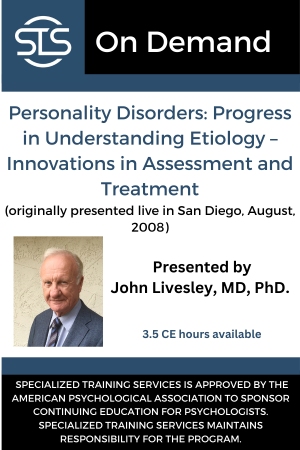
    Personality Disorders: Progress in Understanding Etiology – Innovations in Assessment and Treatment

    $29.99

    Program description:

    Research on personality disorder has increased considerably in recent years leading to fundamental changes in ideas about the structure, origins, classification, and treatment of this disorder. This talk will provide a broad overview of this work and its implications for assessment and treatment. Progress in understanding the dimensional structure of personality disorder will be discussed in terms of its implications for future classifications, assessment, and treatment planning. Traditional ideas that personality disorder arises from psychosocial adversity are being supplemented with an understanding of genetic influences on personality that have important implications for treatment and ideas about the nature of therapeutic change. It will be argued that these developments, along with the results of systematic evaluations of treatment outcome, point to the importance of an integrated and eclectic approach to treatment that combines strategies and interventions from different therapeutic models.

    Workshop Content

    • Growth in empirical research and challenges to traditional assumptions
    • Nosology and Assessment: The limitations of categorical diagnoses and the emerging consensus on the dimensional structure of personality disorder
    • Implications for assessment
    • Application in treatment planning
    • Etiology: Personality disorder as a bio-psychological entity
    • Genetic and psychosocial influences on personality
    • The interplay of genes and environment in the pathogenesis of personality disorder
    • Implications for treatment
    • Treatment of personality disorder
    • Results of outcome studies
    • Importance of an integrated eclectic approach
    • Conceptualizing the treatment process

    On-Demand Video

    Continuing Education (CE credit): Contact Us for Continuing Education credits and costs

    Presenter: John Livesley, M.D., Ph.D.

    Venue: Live Conference Presentation

    Location: San Diego, CA

    Add to cartLoading Done
    Quick View CompareAdded
  • Borderline Personality Disorder

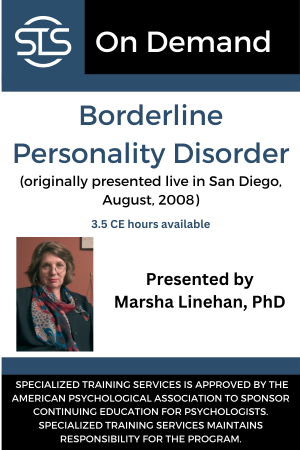
    Borderline Personality Disorder

    $29.99

    Borderline Personality Disorder (BPD) is a troubling condition, for the patient, his/her relationships, as well as the therapist. BPD is characterized by rapid mood swings, intense and tumultuous attachments in relationships and frequently, suicidal thoughts. These conditions can make clients with BPD difficult to manage and treat in therapy, especially when using a “treatment-as-usual” approach, however appropriate treatment has been shown to lead to very positive outcomes. This workshop will review the characteristics and current assessment measures for BPD. Emotional dysregulation is a core characteristic of BPD and its significance will be addressed. Management of suicidal behaviors are critical, given that those behaviors are the signature response of BPD. Additionally, the clinical characteristics of BPD will be enumerated. Dr. Linehan will discuss the latest research on treatment for BPD and compare the success of the leading treatment modalities. Since most research has been done on Dialectical Behavior Therapy (DBT), she will discuss how and why she believes that therapy is the treatment of choice. Her lecture will be augmented with case studies exemplifying the use of DBT with BPD clients.

    Workshop Content

    • Characteristics of Borderline Personality Disorder (BPD)
    • Why assess for BPD?
    • Assessment measures for BPD
    • Easy screening measures
    • Structured Interviews
    • Semi-structured Interviews
    • Clinical Interviews
    • Emotion dysregulation as the core characteristic of BPD
    • Suicidal behaviors as the signature response of BPD
    • Clinical characteristics of BPD
    • Latest research on treatment of BPD
    • Treatment-as-Usual
    • Schema-focused Therapy
    • Transference-Based Psychotherapy
    • Mentalization-Based Psychotherapy
    • Dialectical Behavior Therapy

    On-Demand Video

    Continuing Education (CE credit): 3.5 hours– Contact Us for Continuing Education credits and costs

    Presenter: Marsha Linehan, Ph.D.

    Venue: Live Conference Presentation

    Location: San Diego, CA

    Add to cartLoading Done
    Quick View CompareAdded
  • Pathways from Childhood Aggression to Adolescent Violence

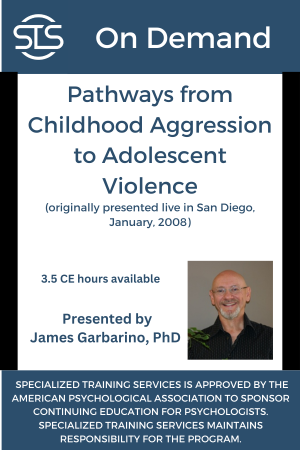
    Pathways from Childhood Aggression to Adolescent Violence

    $29.99

    One of the important developmental starting points in understanding violence is that physical aggression is essentially universal in infants (and equally so for males and females). Early trauma creates risk that this early aggression will coalesce into violent behavior in adolescence. The experience of abuse sets the child up for the kind of “risky thinking” that leads to chronic patterns of aggression, bad behavior, acting out and violating the rights of others that can lead to a diagnosis of “conduct disorder.” If no intervention occurs, this pattern of childhood conduct disorder becomes the entryway into adolescent delinquent and antisocial violent behavior. The more socially toxic (and traumatic) the environment in which childhood and adolescence occur, the more likely it is that childhood conduct disorder will translate into adolescent violence. Changing patterns of aggression in girls provide a useful insight into how and why these processes take place. This presentation will analyze these behaviors in girls and boys for their similarities and differences and discuss the implications for violence in adolescence.

    Four elements of “risky thinking” that link early trauma to conduct disorder in childhood
    Three elements of social toxicity that affect the prognosis for childhood conduct disorder
    Two risk factors and two protective factors affecting the impact of early trauma on subsequent aggression and violence

    On Demand Video

    Continuing Education (CE credit): 3.5 hours– watch the video, pass the test, print your certificate!

    Presenter: James Garbarino, Ph.D.

    Venue: Live Conference Presentation

    Location: San Diego, CA

    Best viewing is done with a mid-sized screen as a full screen will lose some of its resolution. This video is from a live conference presentation and is largely unedited. In some cases you may not hear a question asked by a participant however, in most cases the presenter will repeat the question.

    We recommend you take notes just as you would if you were in a live conference as those notes will be helpful to learning and will come in handy for the test which follows.

    Add to cartLoading Done
    Quick View CompareAdded
  • Obsessive-Compulsive and Histrionic Personality Disorder

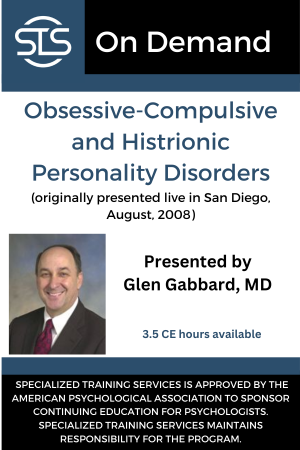
    Obsessive-Compulsive and Histrionic Personality Disorder

    $29.99

    Obsessive-compulsive personality disorder is one of the most common clinical entities on Axis II of DSM-IV. It is frequently confused with obsessive-compulsive disorder, and the differences will be outlined. The psychodynamic underpinnings of OCPD will be discussed, and the optimal psychotherapeutic approaches will be illustrated. Randomized controlled trials validated the efficacy of psychodynamic psychotherapy in the treatment of OCPD.

    Histrionic personality disorder has a time-honored tradition that links it with hysterical personality disorder. The two can be considered as residing on a continuum with histrionic personality disorder having more in common with borderline personality disorder, while hysterical personality disorder has more in common with character neuroses. Some of the underlying psychodynamic features will be discussed, and psychotherapeutic strategies will be outlined.

    This training covers:

    • The major psychodynamic themes in obsessive-compulsive personality disorder
    • The difference between obsessive-compulsive disorder and obsessive-compulsive personality disorder
    • Optimal psychotherapeutic strategies with patients who have obsessive-compulsive personality disorder
    • The major psychodynamic themes in histrionic and hysterical personality disorders
    • Diagnostic differences and the strategic therapeutic differences between hysterical and histrionic personality disorders
    • Management of erotic and eroticized transferences in histrionic personality disorder as well as patients who are hysterically organized

    On-Demand Video

    Continuing Education (CE credit): 3.5 hours – This is the NON-CE Version (Video Only; no certificate). To purchase the Continuing Education version (with exam and certificate) or if you need a certificate for your employer, CLICK HERE”

    Presenter: Glen Gabbard, M.D.

    Venue: Live Conference Presentation

    Location: San Diego, CA

    This has been approved for 3.5 APA, SHRM, or ASIS Continuing Education hours/credits.


    Specialized Training Services is approved by the American Psychological Association to sponsor continuing education for psychologists. Specialized Training Services maintains responsibility for this program and its content. AI was not used in the development of this program or any of its content.

    Specialized Training Services, Inc. is recognized by SHRM to offer Professional Development Credits (PDCs) for SHRM-CP® or SHRM-SCP® recertification activities.
    Add to cartLoading Done
    Quick View CompareAdded
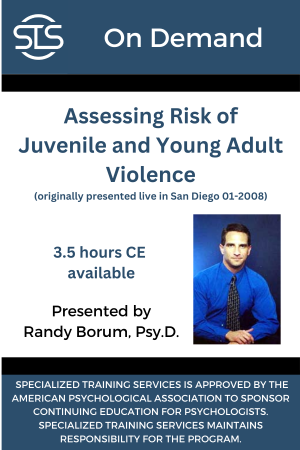
  • Assessing Risk of Juvenile and Young Adult Violence

    Assessing Risk of Juvenile and Young Adult Violence

    $29.99

    This is for the video only. For the APA Continuing Education version, with Exam, Course Evaluation and Certificate, Click Here

    Program description:

    There has been a swell of concern among the public and among professionals working in schools, juvenile justice, law enforcement and behavioral health services about violent behavior among children and adolescents. There is a need to advance the practice of assessing violence risk in juveniles to parallel the progress made in assessing adults, and to develop a systematic and thoughtful approach to assessing situations where an adolescent may come to official attention because of some threatening or otherwise inappropriate communication or behavior of concern.

    This presentation addresses precisely those issues and will review recent trends in youth violence, summarize and distill twenty years of research on violence risk factors in youth, and discuss principles for conducting an effective, developmentally-informed risk assessment for youth including the use of structured assessment instruments. Special attention will be given to distinguishing between assessments of risk for general violence and those for targeted violence. The training will also help participants to understand the current “state of the science” in providing effective interventions for youth violence .

    Child/Adolescent Development and Violence Risk
    Types of Aggression in Youth
    Risk Factors for Violence in Adolescents
    Understanding and Assessing “Psychopathic Traits” in Youth
    Risk Assessment vs. Violence Prediction
    Principles for Effective Risk Assessment
    Targeted Violence and Threat Assessment
    Current Approaches to Assess Risk for Targeted Violence
    Principles of the Threat Assessment Approach
    Principles for Conducting an Effective Threat Assessment
    What works in Treating Violent Adolescents

    Presenter: Randy Borum, Psy.D.

    Venue: Live Conference Presentation

    Location: San Diego, CA

    This video is from a 2008 live conference presentation and is largely unedited. In some cases you may not hear a question asked by a participant however, in most cases the presenter will repeat the question.

    $29.99

    Add to cartLoading Done
    Quick View CompareAdded
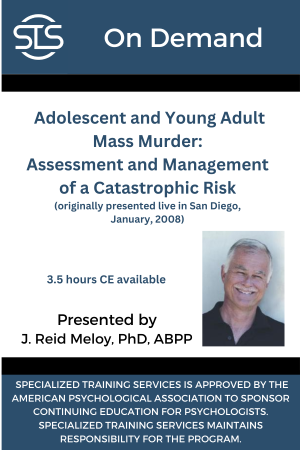
  • Adolescent and Young Adult Mass Murder: Assessment and Management of a Catastrophic Risk

    Adolescent and Young Adult Mass Murder: Assessment and Management of a Catastrophic Risk

    $59.99

    This on-demand presentation covers understanding adolescent and young adult mass homicide perpetrators from a threat assessment and management perspective.

    The training will support the learner in understanding:

    • Offender and offense characteristics in adolescent and young adult mass murders
    • Differences between predatory and affective modes of violence in mass murders and the legal implications of such a distinction
    • Markers along the pathway toward violence in known school shootings and mass homicides

    On Demand Video

    This is the NON-CE Version (Video Only; no certificate). To purchase the Continuing Education version (with exam and certificate) or if you need a certificate for your employer, CLICK HERE

    Continuing Education Credits: 3.5 hours

    Presenter: Reid Meloy, Ph.D.

    Venue: Live Conference Presentation

    Location: San Diego, CA


    This video is designed to play on a normal cable or DSL broadband internet connection. Dial up connections will probably not load this video quickly enough for proper viewing. Video resolution is very good but not as high as possible to decrease downloading time. Best viewing is done with a mid-sized screen as a full screen will lose some of its resolution.

    This video is from a live conference presentation and is largely unedited. In some cases you may not hear a question asked by a participant however, in most cases the presenter will repeat the question.

    We recommend you take notes just as you would if you were in a live conference as those notes will be helpful to learning and will come in handy for the test which follows.

    This has been approved for 3.5 APA, SHRM, or ASIS Continuing Education hours/credits.


    Specialized Training Services is approved by the American Psychological Association to sponsor continuing education for psychologists. Specialized Training Services maintains responsibility for this program and its content. AI was not used in the development of this program or any of its content.

    Specialized Training Services, Inc. is recognized by SHRM to offer Professional Development Credits (PDCs) for SHRM-CP® or SHRM-SCP® recertification activities.
    Add to cartLoading Done
    Quick View CompareAdded
  • The Stop Child Molestation Book

    The Stop Child Molestation Book

    $4.99

    Published in 2001, 363 pages

    Contents
    1. The Stop Child Molestation Plan: Into a New Era
    2. Childhood Beginnings of the Desire to Molest
    3. Child Molesters by Accident
    4. Victims of Molestation Who Become Molesters
    5. A Child Molester in the Family: Father Molests Daughter
    6. The Magic of Early Diagnosis
    7. Treatment: The Medicines and the Therapies
    8. How Many Children can you Save?
    Appendices

    Add To CartLoading Done
    Quick View CompareAdded
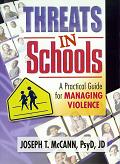
  • Threats in Schools: A Practical Guide for Managing Violence

    Threats in Schools: A Practical Guide for Managing Violence

    $9.99

    Published 2002, 154 pages
    Joseph T. McCann, PsyD, JD

    In the wake of several highly publicized school shootings, the problem of school violence has increasingly become a focus of concern for the general public as well as teachers, school officials, and students. Drawing on case studies from publicized violent incidents as well as from Dr. McCann’s private practice, Threats in Schools: A Practical Guide for Managing Violence provides techniques for identifying, conceptualizing, assessing, and managing threatening behavior by students in school settings. Offering specific case management strategies for a variety of situations, this indispensable volume provides guidance on formulating questions to ask and suggestions for developing strategies for managing potentially violent situations.

    Integrating threat assessment and risk management models, this approach will help you target potential threats to property, other students, teachers, and school staff. The interdisciplinary approach recognizes that violent behavior is dependent on the characteristics of the perpetrator, victim, and setting, and that the relationship between threats and violence is not always clear.

    Threats in Schools offers well-grounded research, detailed case studies, and theoretical approaches to help you deal with the tough issues, including:

    • zero-tolerance policies and their more effective alternatives
    • why profiling techniques to identify violence-prone students are of limited use
    • interventions to defuse potentially violent situations
    • critical incident stress management
    Add To CartLoading Done
    Quick View CompareAdded
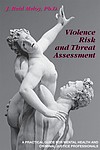
  • Violence Risk and Threat Assessment

    Violence Risk and Threat Assessment

    $37.99

    230 pages, published by Specialized Training Services 08/00

    ISBN: 0970318901 / Paperback

    Perhaps the most readable and practical book on violence risk ever written. Reflects the standard of practice in the field.

    “Reid Meloy is a leader in the arena and I highly recommend this book to members of the criminal justice and mental health communities. He has written about a very complex subject in a clear and understandable manner, insuring that this book will become a standard for others.” Roy Hazelwood, M.S., FBI (ret.)

    Table of contents:

    Chapter 1 – Introduction

    Chapter 2 – Some Necessary to Understand Technical Models

    Chapter 3 – Model for Assessing Violence Risk

    Chapter 4 – Individual/Psychological Domain

    Chapter 5 – Social/Environmental Domain

    Chapter 6 – Biological Domain

    Chapter 7 – Applying the Model

    Chapter 8 – Affective and Predatory Violence

    Chapter 9 – Psychopathy

    Chapter 10 – Other Risk Assessment Instruments

    Chapter 11 – Threatening Communications

    Chapter 12 – Stalking (Obsessional Following)

    Chapter 13 – New Research on Targeted Violence

    Chapter 14 – Communicating Risk

    Chapter 15 – Professional Office Safety, Footnotes, Recommended Books, Acknowledgments

    Add To CartLoading Done
    Quick View CompareAdded
  • Youth Violence Prevention

    Youth Violence Prevention

    $34.99

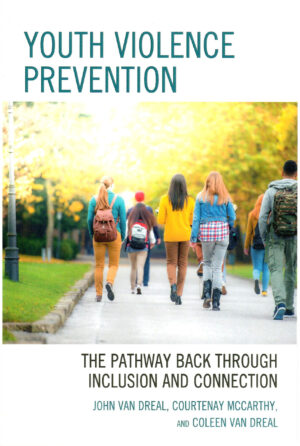
    Preventing Youth Violence: The Pathway Back through Inclusion and Connection Published in 2022. John van Dreal, principal author, author of Assessing Student Threats, 2nd Edition This is a book about behavioral threat assessment that focuses on prevention and early intervention. It’s about thoughtful connection, inclusion, prosocial relationship building, and the restoration of meaningful and positive…

    Add To CartLoading Done
    Quick View CompareAdded
  • Female Sexual Abusers

    Female Sexual Abusers

    $9.99

    394 pages, published in 1999.

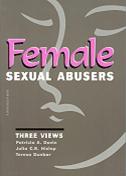
    While a few more resources exist now then ten years ago, literature on female sexual abusers is still meager.  Female abuser typologies are in flux, motivations rely more on assumptions than research results. Treatment modalities continue to be adapted from those used with men, and treatment outcomes remain undocumented.  Every step we take to add to our knowledge of these hidden abusers is a step toward a safer society.

    Female Sexual Abusers: Three Views is one such step, or perhaps more accurately, three. Drs. Davin Davin, Dunbar, and Hislop look at different aspects of female sexual abusers.  Their rigorous, detailed research provides a deeper understanding of why woman abuse. Beginning with extensive literature reviews, their examination of women who abuse ranges from the characteristics of co-offenders, to factors in etiology of offending for women, to comparisons of psycho-social histories of women abusers and non-offending women in the same milieus.

    A good but slightly dated book on this emerging topic.

    Add To CartLoading Done
    Quick View CompareAdded
  • Children Who Witness Homicide and Other Violent Crimes

    Children Who Witness Homicide and Other Violent Crimes

    $4.99

    Published 2002, 239 pages

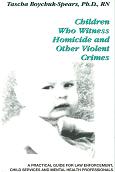
    This one of a kind book provides information on how to conduct investigative interviews with children who have witnessed a homicide or other violent crime. The second part of the book discusses counseling children who have seen violent crimes. Forensically sound techniques, interview processes, environment, are all discussed. The author, Tascha Boychuk-Spears, has interviewed or counseled over 3000 children and is considered the foremost expert in the field.

    “Enormously instructive and without a doubt a must for criminal justice and mental health professionals” Lt. Brad Simpson, MFT, Las Vegas Metro Police Dept.

    “Gripping… the first book of its kind by one of the foremost authorities on children who witness homicide” Caryl Ainley, Ph.D., Psychologist, former clinical director Children’s Advocacy Center of Phoenix

    “Dr. Spears has presented an excellent resource for persons functioning in the fields of law enforcement, child protection services, mental health, education and corrections. With devastating clarity, Spears has unveiled the suffering of children touched by violence.” Det. Donald Morris, NYPD

    Chapter titles:
    Prologue: Entering the World of Children’s Grief
    Chapter 1. Foundations of Investigative Interviews
    Chapter 2. When the Basic Principles Don’t Work
    Chapter 3. Interviews With Preschool Children: Two Dynamic Cases
    Chapter 4. Investigating Child Deaths in Foster Care
    Chapter 5. Child Witnesses in Cold Case Homicides
    Chapter 6. Managing Active Children During Interviews
    Chapter 7. Children’s Accuracy in Describing Homicide of a Family Members: Preliminary Research Findings
    Chapter 8. Children Who Witness Domestic Violence
    Chapter 9. Child Abductions: Victims and Witnesses
    Chapter 10: Charley and Sammy: The Quiet Children
    Chapter 11: Grief and Trauma: Counseling Children Who Witness Severe Violence
    Chapter 12. Compassion Fatigue
    Epilogue, References, Recommended Books

    Add To CartLoading Done
    Quick View CompareAdded